
Things to Do in Ljubljana: First-Timer's Guide
Ljubljana’s compact center makes it tempting to schedule every landmark in a few rushed hours, even though the city works best when you leave room for riverside cafés, market stops, and a bicycle ride beyond the pedestrian core. Pack too much into one day and you may spend your visit crossing the same bridges repeatedly while missing the relaxed outdoor character that distinguishes Slovenia’s capital. This Ljubljana travel guide organizes the essential sights, cycling routes, food stops, neighborhoods, and excursions into a practical plan that helps you use your time well.
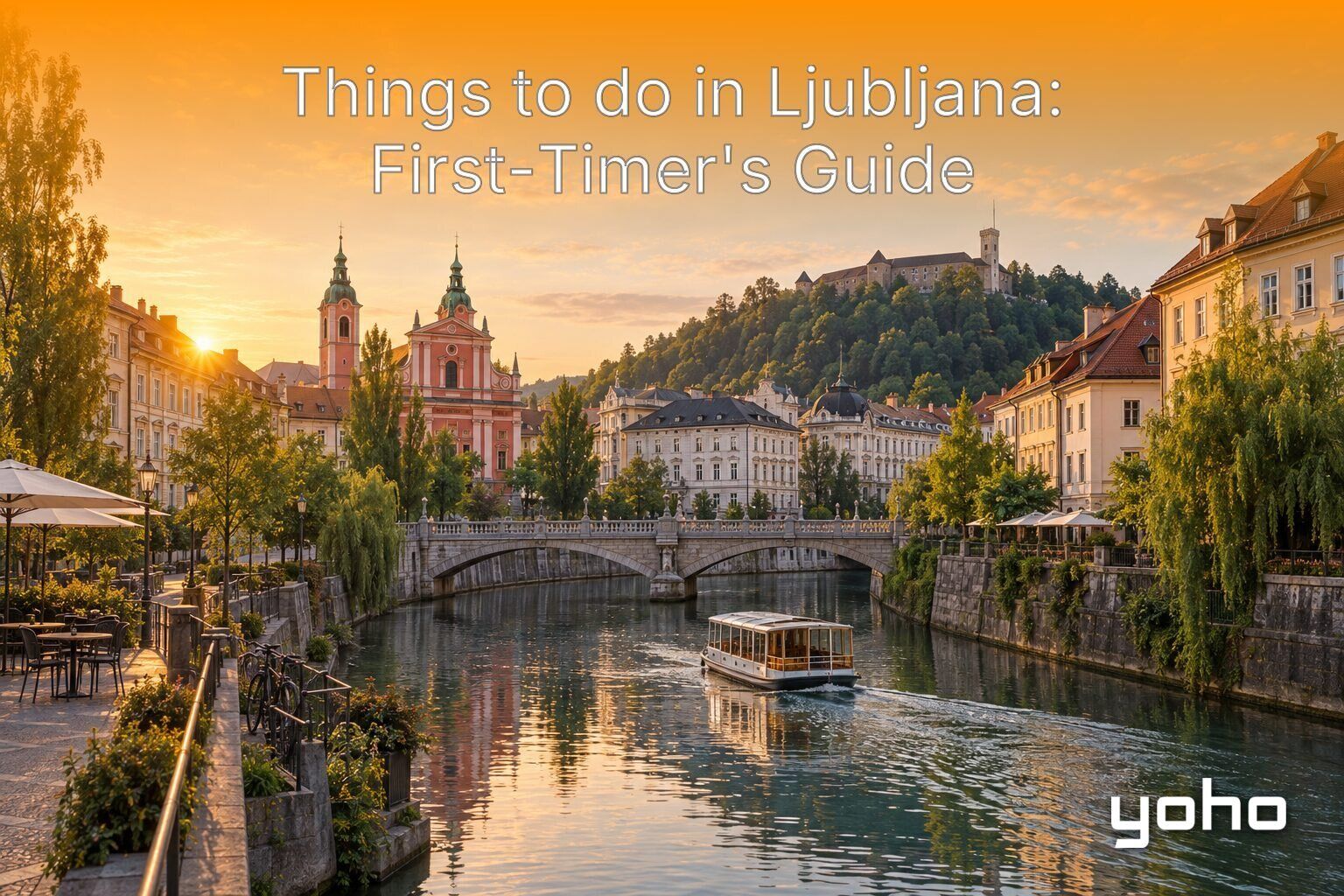
What Are the Best Things to Do on a First Visit to Ljubljana?
The best things to do in Ljubljana are walking through the Old Town, visiting Ljubljana Castle, browsing the Central Market, relaxing beside the Ljubljanica River, cycling to Tivoli Park or Špica, and trying Slovenian food. Most central Ljubljana attractions are close enough to combine in one day, while a second or third day creates time for museums, longer cycling routes, and an outdoor excursion.
The Ljubljanica River provides a natural reference point. The Old Town lies primarily along its eastern bank beneath Ljubljana Castle, while the modern center, museums, and Tivoli Park spread west and north. If you lose your bearings, returning to the river usually places you within a short walk of Prešeren Square or the Central Market.
For a balanced first day, begin at Prešeren Square, cross the Triple Bridge, walk through the market, and continue to Dragon Bridge. After visiting the castle, return through Town Square and stop beside the river rather than immediately moving to another attraction. This route covers the principal landmarks while leaving time to notice Plečnik’s bridges, colonnades, and embankments.
On a second day, choose activities beyond the core. Walk through Tivoli Park, cycle south through Krakovo and Trnovo to Špica, or visit a museum in the modern center. A third day can include Lake Bled, Šmarna Gora, Postojna Cave, or the Ljubljana Marshes.
The center is largely pedestrianized, which makes walking pleasant but changes how you should plan hotel access. Taxis and private vehicles may not reach the door of accommodation inside the restricted zone. Confirm the nearest drop-off point if you have heavy luggage or reduced mobility. Small electric vehicles known locally as Kavalirs operate within the pedestrian area and can help visitors cover short central distances.
For your first time in Ljubljana, avoid treating the city only as a checklist. Its strongest rhythm comes from alternating a major sight with time outdoors: the castle followed by a riverside lunch, a museum followed by Tivoli Park, or the market followed by a cycle through Krakovo.
Which Old Town and Castle Sights Should You Prioritize?
Prioritize Prešeren Square, the Triple Bridge, Central Market, Dragon Bridge, Ljubljana Cathedral, Town Square, and Ljubljana Castle. These landmarks form a logical walking route of roughly half a day, although the castle’s exhibitions, viewpoints, and funicular can extend it. Begin early if you prefer quieter bridges and market lanes.
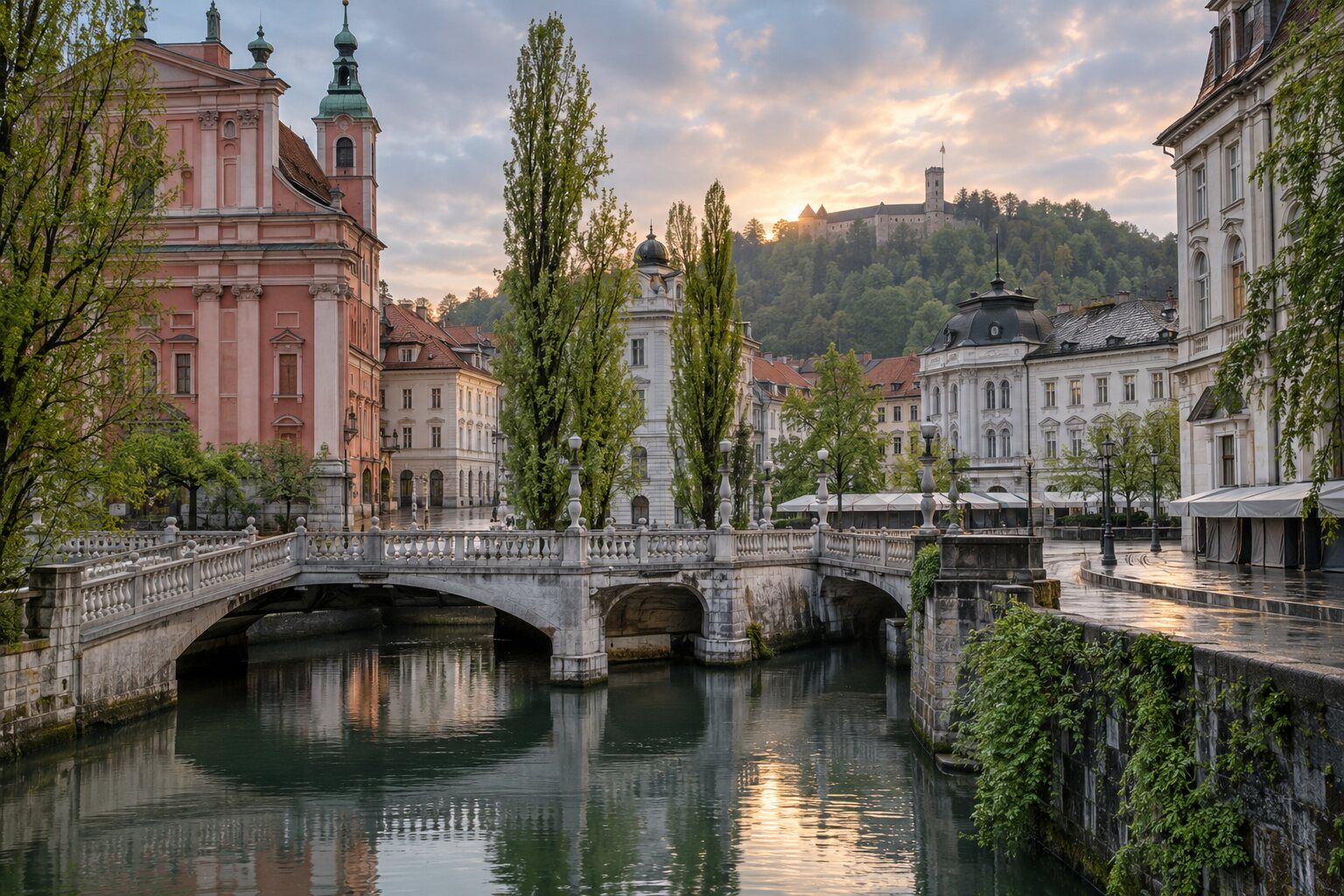
Start at Prešeren Square, the central meeting point facing the pink Franciscan Church of the Annunciation. Cross the Triple Bridge, designed as a three-part river crossing by architect Jože Plečnik, and follow the colonnaded market toward Dragon Bridge. The dragon sculptures have become one of the city’s most recognizable symbols.
- Prešeren Square and Triple Bridge:Open at all hours with no admission charge. They are about a 10-minute walk from the main bus and railway stations.
- Central Market:The outdoor stalls generally operate from Monday to Saturday, with the greatest choice in the morning. Access is free; individual vendors set their own prices. The market is beside the Triple Bridge and Vodnik Square.
- Dragon Bridge:Open at all hours and free to cross. Walk east from the Central Market for approximately five minutes.
- Ljubljana Cathedral:Usually accessible during daytime hours outside services. A modest visitor admission charge may apply. The cathedral stands between the market and Town Square.
- Ljubljana Castle:The grounds can be visited independently, while the viewing tower and exhibitions require a ticket. Standard castle admission is commonly around €15 for an adult, or about €19 when combined with a return funicular ride. Seasonal opening hours vary, typically from morning until early evening or later in summer.
You can reach Ljubljana Castle by funicular from Krek Square in a few minutes or walk up via the signed paths from the Old Town. The walk takes roughly 15 to 25 minutes, depending on your route and pace. Take the funicular uphill and walk down if you want the view without completing the steeper ascent.
Ticket prices and access hours can change for events or seasonal operations. Review theofficial Visit Ljubljana overview of city sights and activitiesbefore fixing your schedule. If you have extra time, add the riverside lane of Breg, the medieval street Mestni trg, and the quieter courtyards around Gornji trg rather than rushing directly to another district.
How Can You Explore Ljubljana by Bicycle and River?
Ljubljana is easiest to cycle beyond the busiest pedestrian lanes, using riverside paths and low-traffic streets to connect Tivoli Park, Krakovo, Špica, and the green outskirts. A two- to three-hour ride reveals more of the city than the central monuments alone, while a river cruise offers a slower alternative without requiring much walking.
The center’s flat terrain makes cycling accessible to casual riders. BicikeLJ, the public bicycle-sharing system, has docking stations across the city, while rental shops offer conventional bicycles and guided tours. Registration, deposits, and current tariffs should be checked before arrival. Public bicycles work best for short rides between stations; a day rental is more convenient if you want to stop frequently or travel beyond the central network.
Which Ljubljana cycling routes are best for casual riders?
- Old Town to Špica:Follow the river south through Trnovo and Krakovo to the landscaped point where the Ljubljanica divides. This gentle route suits a one-hour outing with café stops.
- Center to Tivoli Park:Ride west from the pedestrian core toward the broad paths of Ljubljana’s main urban park. Continue toward Koseze Pond for a longer green loop.
- Path of Remembrance and Comradeship:This approximately 34-kilometer recreational route circles Ljubljana along the line of a wartime barrier. You can ride one segment rather than completing the entire loop.
- Ljubljana Marshes:The flat landscape south of the city offers longer rides through fields, villages, and wetland surroundings. Choose a touring bicycle, carry water, and expect fewer services than in the center.
Pedestrian zones require patience. Ride slowly, yield to people on foot, and dismount where crowds make cycling impractical. Helmet rules can differ by age, but wearing one is sensible for every rider. Lock rental bicycles securely whenever you stop.
If cycling does not fit your plans, join a sightseeing boat on the Ljubljanica. Cruises commonly last around 45 minutes and show how Plečnik’s bridges, embankments, and market structures relate to the river. Departure points and schedules vary with river conditions, season, and operator, so check availability on the day.
Which Markets, Foods, and Local Events Should You Experience?
Browse the Central Market for seasonal produce and quick tastings, choose a riverside terrace for the setting, and visit neighborhoods such as Trnovo for a quieter dinner. Slovenian menus often combine Alpine, Mediterranean, Balkan, and Central European influences. Reserving one meal for regional dishes gives your Ljubljana itinerary more local context than relying only on international restaurants.
At the Central Market, look for fruit, vegetables, bread, cheese, honey, cured meat, and pumpkin-seed products. Arrive before lunch for the strongest selection, especially on Saturday. The covered market beneath Plečnik’s colonnade also contains specialist food stalls and small shops.
Useful dishes and flavors to recognize include:
- Štruklji:Rolled dumplings with sweet or savory fillings, often served as a side dish or dessert.
- Carniolan sausage:A protected Slovenian sausage commonly served with mustard, bread, or horseradish.
- Potica:Rolled festive pastry made with fillings such as walnut, poppy seed, or tarragon.
- Jota:A filling stew usually based on beans, sauerkraut or sour turnip, and potatoes.
- Slovenian wine:Wine lists may feature bottles from Primorska, Podravje, and Posavje, Slovenia’s principal wine-producing regions.
Riverside terraces are valuable for their setting, although they are not always the best measure of local prices or cooking. Compare menus one or two streets away before sitting down. Trnovo, Krakovo, and parts of the modern center provide calmer alternatives within walking distance.
Seasonal events can change the city’s pace. Warm months bring open-air concerts, markets, and dining events, while December adds lights and festive stalls along the river. Friday food-market events are popular in suitable weather but should not be treated as guaranteed year-round attractions. Confirm the date and location close to your visit, then keep a conventional market or restaurant as a backup.
Which Outdoor Excursions Fit a Ljubljana Itinerary?
Choose Šmarna Gora for a nearby hike, Lake Bled for an iconic alpine landscape, the Ljubljana Marshes for cycling and birdlife, or Postojna for caves. Šmarna Gora can fill half a day, while Bled and Postojna usually deserve most of a day once transport, meals, and sightseeing are included.
Šmarna Gorais the simplest active excursion. Local buses take you from central Ljubljana toward trailheads at the northern edge of the city, followed by a climb of roughly one hour for many walkers. The summit rewards the effort with broad views and a casual food stop. Wear shoes with grip because forest paths can remain muddy after rain.
Lake Bledlies about 55 kilometers northwest of Ljubljana. Buses are often the most straightforward option for travelers without a car, although journey times rise with traffic. A practical day includes the lakeside path, a viewpoint or castle visit, and enough unscheduled time for weather changes. Trying to combine Bled with several distant attractions can reduce the trip to transport and photographs.
Ljubljana Marshessuit travelers who want a low-key landscape rather than a famous landmark. The wetlands begin south of the city and are best explored by bicycle or on a guided nature outing. Roads and paths can be exposed to sun and wind, so carry water and sun protection.
Postojna Caveis around 50 kilometers southwest of Ljubljana and can be reached by train, bus, organized tour, or car. Timed cave entry, seasonal demand, and onward transport require more planning than a city walk. The underground environment remains cool even during summer, making a warm layer useful.
| Excursion | Best for | Typical time needed | Main planning concern |
|---|---|---|---|
| Šmarna Gora | Hiking and views | Half day | Muddy or steep paths |
| Lake Bled | Alpine scenery | Full day | Traffic and busy periods |
| Ljubljana Marshes | Cycling and nature | Half or full day | Limited services |
| Postojna Cave | Underground landscapes | Most of a day | Timed admission |
How Should You Build a One-, Two-, or Three-Day Ljubljana Itinerary?
With one day, focus on the Old Town, market, riverside, and Ljubljana Castle. Use a second day for Tivoli Park, museums, and a cycling route through Krakovo, Trnovo, or Špica. On a third day, take an outdoor excursion or complete a longer ride. Stay near the Old Town for landmark access, near the railway station for day trips, or around Trnovo and Krakovo for a quieter base.
One day in Ljubljana
Begin at Prešeren Square and follow the river to the Central Market and Dragon Bridge. Continue through the Old Town before walking or taking the funicular to Ljubljana Castle. After descending, spend the late afternoon along Breg or beside the river and finish with a Slovenian dinner. This compact route covers the essential Ljubljana attractions without requiring transport between stops.
Two days in Ljubljana
Follow the central route on the first day. On the second, walk through Tivoli Park or visit a museum before renting a bicycle for the route through Krakovo, Trnovo, and Špica. Return to the center for the market or a seasonal event. This schedule works particularly well for travelers who want both historic sights and outdoor activities.
Three days in Ljubljana
Use the first two days for the city, then choose one excursion based on your interests and the weather. Šmarna Gora offers the shortest active escape, while Lake Bled and Postojna Cave require most of a day. The Ljubljana Marshes are a practical choice for travelers who prefer cycling and a less crowded landscape.
Which Ljubljana neighborhood fits your itinerary?
- Old Town:Best for a short city break and evening atmosphere. Expect pedestrian access restrictions, busy terraces, and higher room rates in prime locations.
- Modern center:Convenient for museums, shops, buses, and the main railway station. You remain within walking distance of the river without staying directly above late-night terraces.
- Trnovo and Krakovo:Good for local streets, riverside walks, and a calmer stay. Check the exact distance to your accommodation if you will carry luggage from public transport.
- Tivoli area:Suitable for runners, families, and visitors prioritizing green space. The Old Town remains reachable on foot or by bicycle.
Spring and autumn call for layers because mornings, sunny afternoons, and rain can occur within the same visit. Summer requires sun protection and a refillable water bottle. Winter travelers should bring a warm outer layer, gloves, and footwear suitable for damp pavements. Ljubljana is not difficult to walk, but cobbles and castle paths make thin-soled fashion shoes a poor primary choice.
A compact umbrella or waterproof jacket is more useful than packing multiple heavy outfits. Add a portable battery for navigation, reservation confirmations, and day-trip tickets. For longer cycling routes, include sunglasses, sunscreen, and a bottle you can secure to the bicycle. Thesmart packing and airport security guidecan help you reduce unnecessary items before departure.
If you stay inside the pedestrian zone, ask your accommodation for arrival instructions before traveling. Knowing the nearest taxi point, bus stop, or permitted vehicle access can prevent an awkward walk over cobbles with full-size luggage.
How Do You Stay Connected and Handle Practical City Details?
Arrange mobile access before arrival if you expect to use walking directions, bicycle stations, restaurant bookings, or day-trip schedules. Ljubljana also requires a little transport preparation: city buses use the local Urbana payment system, the center restricts vehicles, and operating times can become less frequent at night or on Sundays.
AneSIMis a digital SIM technology built into a compatible device, allowing you to activate an eSIM profile without replacing your physical SIM. TheGSMA overview of eSIM technologyexplains how remote SIM provisioning works across supported devices and mobile networks.
Before purchasing an eSIM plan, confirm that your phone is unlocked and compatible. Apple maintains anofficial list of iPhone models and regions supporting eSIM, while device menus and manufacturer specifications can confirm support on Android phones. Older devices and some region-specific models may not support eSIM, so a physical SIM or roaming arrangement may still be necessary.
If your Ljubljana itinerary depends on live maps, bicycle-station information, messages, and changing day-trip schedules, arranging data before departure reduces your reliance on café Wi-Fi. For that trip-specific need, Yoho Mobile lets you choose destination countries, data allowance, and validity days according to your route. You canbrowse Yoho Mobile eSIM plansand select an option that matches the length of your stay and expected navigation use.
For a two- or three-day city break focused on maps and messaging, a small allowance may be enough. Choose more data if you will stream video, use social media heavily, share a hotspot, or continue into neighboring countries. The guide toGoogle Maps mobile data usecan help you estimate navigation needs more realistically.
If you want to install the profile before departure and monitor usage while moving between Ljubljana attractions, use theYoho Mobile app for iOSor theYoho Mobile app for Android. Activate the eSIM according to the plan instructions, and keep your primary physical SIM settings unchanged unless you intentionally want calls or texts through your home line.
If you are unsure whether eSIM setup will work smoothly on your phone, test it before relying on mobile data for castle directions or day-trip connections. Yoho Mobile offers afree eSIM trialfor a low-commitment compatibility check. Travelers concerned about unexpectedly running out of data can also review howYoho Careprovides emergency data service in eligible situations.
Within Ljubljana, walk for central sightseeing and use buses for outer districts or trailheads. Purchase or load an Urbana card or use the supported Urbana mobile option before boarding, since paying a driver with cash is generally not the normal process. Validate the required fare when you travel and check the latest rules locally.
Keep offline copies of your accommodation address, passport details, insurance information, and essential tickets. Downloading an offline map also gives you a backup if mobile data is temporarily unavailable. With those basics arranged, you can move between Ljubljana Castle, riverside paths, bicycle routes, and outdoor excursions without turning every change of plan into a search for public Wi-Fi.