
Best Time to Visit Tashkent, Uzbekistan
Tashkent can be tricky to time because it is both a capital city break and the usual launch point for Uzbekistan’s Silk Road route. Arrive during the hottest weeks or a cold, grey spell, and simple plans like walking through Chorsu Bazaar, riding the metro between landmarks, or taking a train to Samarkand can feel more tiring than expected. This guide shows when to visit Tashkent by season, month, traveler type, and itinerary style so you can match the city’s weather with the trip you actually want.
When Is the Best Time to Visit Tashkent?
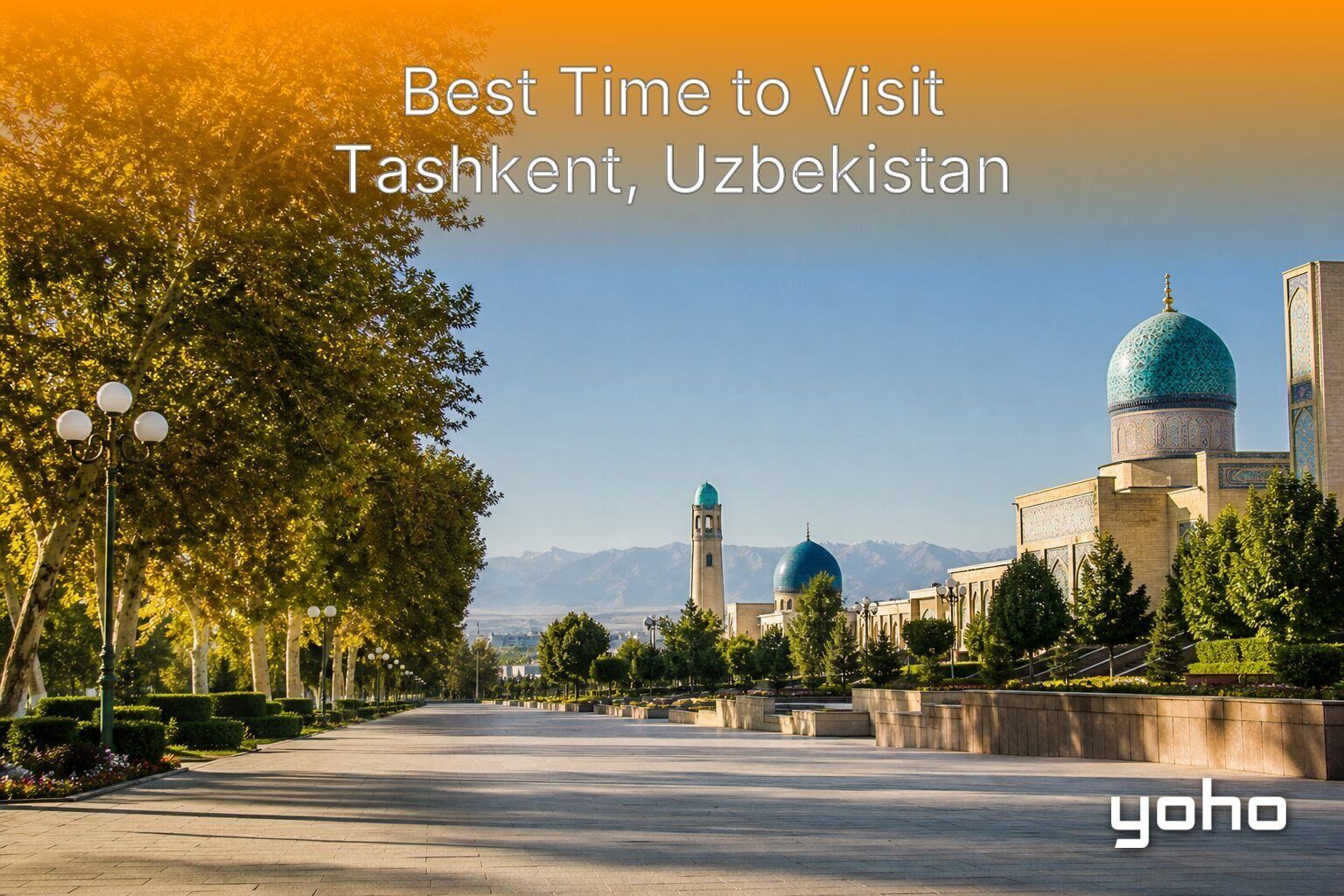
Late March to early May and late September to late Octoberare the best times to visit Tashkent. These shoulder-season windows bring mild daytime temperatures, comfortable walking conditions, moderate crowds, and easy onward travel to Samarkand, Bukhara, and the Fergana Valley.
The best time to visit Tashkent depends on whether you want a relaxed city break or a wider Uzbekistan itinerary. For most travelers, spring wins because the city’s parks, boulevards, and markets feel lively without summer heat. Autumn is nearly as good, with clearer-feeling days, cooler evenings, and a calmer rhythm after the busiest international travel months.
If you are planning the classic Tashkent, Samarkand, and Bukhara route, the best time of year to visit Tashkent is usually April or October. These months let you walk comfortably in Tashkent, spend long days around Samarkand’s Registan, and handle train transfers without extreme temperatures. They also work well for travelers who want photos, street food, museums, and a mix of historic and modern neighborhoods.
Summer is the least comfortable season for long outdoor sightseeing because heat builds through the afternoon. Winter can be rewarding for lower prices and quieter museums, but it brings shorter days and colder conditions. For a first trip, avoid treating Tashkent as only a transit stop. The city has enough character for two full days before you continue into the rest of Uzbekistan.
Why Is Spring the Most Comfortable Season in Tashkent?
Late March to early Mayis the most comfortable season in Tashkent, with mild temperatures, green parks, and manageable crowds. Expect roughly 15°C–27°C (59°F–81°F), 12–14 hours of daylight, moderate prices, and strong conditions for walking-heavy sightseeing.
Spring gives Tashkent its easiest travel rhythm. March can still feel cool, especially in the morning, but by April the city becomes ideal for outdoor wandering. You can start at Khast Imam, continue to Chorsu Bazaar, pause for lunch, then use the metro as both transport and architecture tour without needing long heat breaks.
Weather snapshot:late March is fresh and changeable, April is mild, and early May begins to warm. Daytime temperatures usually sit in a comfortable band for sightseeing, while evenings still call for a light jacket. Rain is more likely in spring than in high summer, so build a flexible museum or cafe slot into your day.
Best for:first-time visitors, couples, photographers, active city explorers, and travelers combining Tashkent with Samarkand. If you are comparing the best time to visit Tashkent and Samarkand, spring is one of the safest choices because both cities are comfortable before the summer heat settles in.
Key events:Navruz, the Persian and Central Asian new year, is celebrated around 21 March. Expect public festivities, food traditions, music, and a festive mood across Uzbekistan. Exact programming changes by year, so check local listings close to your trip dates rather than planning around one fixed event schedule.
What to pack:bring layers, a light rain jacket, comfortable walking shoes, sunglasses, and one smarter outfit if you plan to visit higher-end restaurants. Spring mornings and evenings can be cool enough to surprise travelers arriving from warmer regions.
How Hot Does Tashkent Get in Summer?
June to early Septemberis hot in Tashkent, with daytime temperatures often around 30°C–38°C (86°F–100°F). Expect 14–15 hours of daylight, lower midday comfort, moderate tourist crowds, and the need to plan indoor breaks between outdoor sights.
Summer in Tashkent is dry, bright, and demanding. The heat does not make the city impossible, but it changes how you should structure each day. The best schedule starts early, moves indoors around lunch, and returns outside in the evening when parks, fountains, and restaurants feel more comfortable.
Weather snapshot:June is hot but still manageable for many travelers. July is usually the toughest month, with strong sun and high daytime temperatures. August remains very hot, though late August can begin to feel slightly easier in the evening. Daylight is long, which helps if you prefer slow afternoons and later dinners.
Best for:travelers who tolerate heat well, museum-focused trips, business travel with controlled schedules, and visitors who prefer fewer long sightseeing queues in the middle of the day. Summer can also suit families if the hotel has strong air conditioning and you avoid overpacked itineraries.
Key event timing:summer is not the main festival draw for most leisure travelers. The more practical seasonal benefit is long daylight for flexible train arrivals, evening walks, and extended restaurant time. If your route continues to desert cities, the heat becomes a bigger planning factor outside Tashkent.
What to pack:prioritize breathable fabrics, a hat, high-SPF sunscreen, sunglasses, electrolyte tablets, and a refillable water bottle. A lightweight scarf can help with sun exposure and mosque visits. If you usually walk 15,000 steps on city breaks, lower that expectation in July and August.
Why Is Autumn a Strong Alternative to Spring?
Mid-September to late Octoberis the best autumn window for Tashkent, with warm days, cooler evenings, and practical conditions for multi-city travel. Expect roughly 18°C–30°C (64°F–86°F), 10.5–12.5 hours of daylight, moderate crowds, and good train-route comfort.
Autumn is the season to choose if you want Tashkent to feel warm rather than fresh. September starts hot, especially in the first half of the month, but conditions improve quickly as the weeks pass. By October, the city becomes comfortable for bazaars, metro stops, museums, and park walks.
Weather snapshot:mid-September still carries late-summer heat, while October is mild and more forgiving. Rain is possible later in the season, but it rarely dominates a whole trip. Evenings cool down enough that a light jacket becomes useful, especially if you dine outside or return late from a train journey.
Best for:food-focused travelers, first-timers, train itineraries, and anyone who wants a strong balance between weather and logistics. Autumn is also one of the best seasons for combining Tashkent with Samarkand and Bukhara because it reduces the heat burden across the full route.
Key events:Uzbekistan Independence Day is 1 September, with celebrations and closures possible around the date. Later autumn feels more like a classic travel season than a festival period, which can be a benefit if you value straightforward sightseeing days.
What to pack:bring light daytime clothes, a jacket for evenings, comfortable shoes, and a compact umbrella in late October. Autumn is also a good time to pack a slightly dressier layer because Tashkent has modern restaurants, theaters, and hotel lounges that feel more polished than many travelers expect.
Should You Visit Tashkent in Winter?
November to Februaryis Tashkent’s low season, with colder weather, fewer visitors, and shorter daylight. Expect roughly -2°C–12°C (28°F–54°F), 9–10.5 hours of daylight, lower hotel demand, and a trip better suited to museums, cafes, and slower city time.
Winter is worth considering if your priority is budget, quiet streets, or a city-focused trip rather than a classic Silk Road photography route. Tashkent has enough indoor interest to fill a short break: museums, metro stations, restaurants, galleries, markets, and tea houses all work in colder months.
Weather snapshot:November is chilly but still workable. December and January are the coldest months, with freezing mornings possible. February begins to shift toward spring, but it can still feel grey. Snow is possible, and icy pavements may slow down walking plans.
Best for:budget travelers, repeat visitors, people who dislike crowds, and travelers using Tashkent for a short stopover. Winter is less suitable for families with young children if your plan depends on long outdoor walks and flexible park time.
Key seasonal reality:winter daylight is limited, so you need to start earlier and group sights by neighborhood. A relaxed two-day route works better than trying to cover every major attraction in one day.
What to pack:bring a warm coat, gloves, a hat, thermal layers, waterproof shoes, and lip balm. Hotel heating is common, so layered clothing matters more than one heavy outfit. For train travel to other cities, keep essentials in a small daypack so cold platforms and transfers feel easier.
What Is Tashkent Weather Like by Month?
Tashkent weather by month ranges from cold winters near freezing to very hot summers above 35°C (95°F). April, May, September, and October usually give the best balance of temperature, daylight, and sightseeing comfort for most city-break and Uzbekistan route plans.
The table below gives practical planning ranges rather than exact forecasts. Check a weather service close to departure, especially in spring and late autumn when conditions can shift from sunny to rainy within a short visit.
| Month | Typical feel | Approx. temperature | Crowds | Best use |
|---|---|---|---|---|
| January | Cold, quiet, short days | -2°C–7°C (28°F–45°F) | Low | Museums, budget stays, cafes |
| February | Cold with early spring hints | 0°C–10°C (32°F–50°F) | Low | Short city breaks |
| March | Fresh, festive, changeable | 6°C–16°C (43°F–61°F) | Moderate | Navruz, parks, first spring trips |
| April | Mild and green | 11°C–22°C (52°F–72°F) | Moderate | Best all-round month |
| May | Warm, bright, increasingly hot | 16°C–28°C (61°F–82°F) | Moderate | City plus Samarkand route |
| June | Hot and dry | 21°C–34°C (70°F–93°F) | Moderate | Early starts, museums, evening walks |
| July | Very hot | 24°C–38°C (75°F–100°F) | Moderate | Indoor-heavy itineraries |
| August | Very hot, slightly easing late | 22°C–36°C (72°F–97°F) | Moderate | Heat-tolerant travelers |
| September | Hot early, pleasant later | 17°C–31°C (63°F–88°F) | Moderate | Autumn route starts |
| October | Mild and comfortable | 10°C–22°C (50°F–72°F) | Moderate | Best autumn month |
| November | Cool and quieter | 4°C–14°C (39°F–57°F) | Low | Lower-cost city trips |
| December | Cold, calm, short days | 0°C–8°C (32°F–46°F) | Low | Museums and food-focused stays |
If you want one simple verdict, April is the best month to visit Tashkent for spring color and walking comfort, while October is the best autumn month. May and September can be excellent too, but they sit closer to summer heat, so plan lighter midday schedules.
How Should You Use Tashkent as a Gateway to Uzbekistan?
Tashkent works best as a two-day arrival city before you continue to Samarkand, Bukhara, Khiva, or the Fergana Valley. Use it to recover from your flight, understand modern Uzbekistan, arrange trains, and ease into local food, money, transport, and etiquette.
Tashkent is not just a place to land and leave. It gives you the modern side of Uzbekistan before the Silk Road cities shift the mood toward tilework, madrassas, and old caravan routes. The contrast makes the wider journey more interesting, especially if you are building a 7–10 day itinerary.
A strong first day covers Khast Imam, Chorsu Bazaar, and several metro stations. Tashkent Metro is known for decorative station design, and it is also a useful way to avoid traffic between central areas. Add Amir Timur Square or the State Museum of Applied Arts if you want a more complete cultural picture.
Your second day can be slower: a neighborhood cafe, a park walk, a museum, and a relaxed dinner. This pacing matters because onward travel can be intense. Samarkand rewards long sightseeing days, Bukhara invites slow wandering through historic lanes, and Khiva can involve a longer transfer depending on your route.
For more general planning support, you can pair this Tashkent travel guide with Yoho Mobile resources onuseful travel appsandflight booking timing. Those decisions are not specific to Uzbekistan, but they help when you are coordinating trains, hotels, and multi-city arrivals.
When Is the Best Time for Your Travel Style?
First-time visitors should choose April or October, families should prioritize April, May, or late September, and budget travelers should consider November to February. Heat-tolerant travelers can visit in summer, but they should plan shorter outdoor blocks and stronger midday breaks.
Different travelers need different seasons. The best time to visit Tashkent Uzbekistan for a photographer may not be the same as the best time for a family with young children or a traveler trying to keep costs low.
- First-timers:choose April or October. These months make the city easiest to understand because you can walk, use the metro, browse markets, and continue to Samarkand without weather dominating the trip.
- Families:choose April, May, or late September. The days are long enough for flexible plans, and temperatures are usually easier for children than July or August.
- Budget travelers:look at November through February. You may find better accommodation value and fewer visitors, but you trade that for cold weather and shorter days.
- Culture-focused travelers:late March is appealing because of Navruz, while April and October offer better all-round museum and street-life balance.
- Food-focused travelers:autumn is especially pleasant because outdoor dining feels comfortable and market visits are easier than during high summer heat.
- Business travelers adding a weekend:March to May and September to November work best, since you can fit meaningful sightseeing around meetings without extreme heat.
For most travelers, the best time of year to visit Tashkent is the shoulder season. It gives you the widest margin for imperfect planning. If a train arrives late, a restaurant is full, or a museum takes longer than expected, the weather is still forgiving enough to adjust.
What Should You Pack and Prepare Before Tashkent?
Pack for Tashkent by season, with layers in spring and autumn, sun protection in summer, and warm clothing in winter. Before departure, prepare offline maps, payment backups, train confirmations, and a reliable mobile data option for navigation, translation, and ride-hailing.
Your packing list should match Tashkent’s continental climate: bigger seasonal swings than many first-time Central Asia visitors expect. Shoes matter most. You will move between bazaars, metro stairs, museums, sidewalks, and train stations, so choose comfort over new footwear. For a broader pre-flight list, Yoho Mobile has a practicalsmart packing and airport security guidethat pairs well with this destination plan.
For spring and autumn, pack layered clothing, a light jacket, sunglasses, and a compact umbrella. For summer, bring breathable clothes, a hat, sunscreen, and electrolyte tablets. For winter, pack a warm coat, gloves, thermal layers, and shoes with grip. Modest clothing is useful for religious sites; shoulders and knees should be easy to cover when needed.
Staying connected is especially useful in Tashkent because you may use maps, translation, train bookings, ride-hailing, restaurant searches, and family messaging in the same day. If you are new to digital travel connectivity, start with this guide toeSIMbasics, then confirm device support before departure; Apple lists supported iPhone setup details onApple Support, and the GSMA explains the underlying embedded SIM standard in itseSIM technology overview.
Yoho Mobile lets you choose destination countries, mobile data amount, and usage duration independently, which is useful if Tashkent is one stop in a wider Central Asia route rather than a fixed-length holiday. You can browse flexible options atYoho Mobile eSIM plansand manage your plan through theYoho Mobile app on iOSorYoho Mobile app on Android.
If you want to test the experience before a bigger trip, Yoho Mobile also explains how to try afree eSIM trial, andYoho Careemergency data service can help if you run out of mobile data while traveling.
Alternative services such as Airalo and Holafly can also be convenient for travel mobile data, and Holafly is known for unlimited-style offers in some destinations. The reason Yoho Mobile fits many Tashkent trips well is control: you can avoid paying for a fixed plan that does not match your exact route, days, or expected usage. Not every phone supports eSIMs, so travelers with older devices may still need a physical SIM or Wi-Fi-based plan.
What Tashkent Trip Tips Make Each Season Easier?
The most useful Tashkent trip tips are to group sights by area, use the metro, carry cash alongside cards, book popular trains early, and adjust your day around heat or daylight. Seasonal timing improves the trip only when your daily schedule matches the weather.
Tashkent is spread out, so location planning saves energy. Stay near a metro-friendly central area if you want easy access to markets, museums, restaurants, and train connections. Amir Timur Square, Oybek, and areas near major metro lines are practical for first-time visitors. If you prefer quieter evenings, choose a hotel away from the widest roads and check recent guest reviews for noise comments.
Transport is straightforward once you combine metro rides with taxis or ride-hailing. The metro is affordable and useful, but it will not place you at every exact doorway. In summer, paying for a short car ride during the hottest part of the day can be a better decision than forcing another long walk.
Cash still matters in markets, small shops, and some taxis. Keep small notes available, and do not rely on one card. ATMs are common in central areas, but backup payment methods reduce stress if a machine is out of service or your bank blocks a transaction.
Train planning matters if Tashkent is your gateway. For spring and autumn, book popular departures to Samarkand and Bukhara at least two to four weeks ahead when possible. If your dates overlap with holidays, allow a wider booking window. Build your Tashkent sightseeing before your first long train ride rather than after it, since delays or fatigue can shrink the day.
Etiquette is simple: greet people politely, ask before taking close-up photos, dress respectfully at religious sites, and use your right hand when offering or receiving items when possible. Tashkent is modern and relaxed in many areas, but thoughtful behavior makes markets, mosques, and family-run restaurants easier to navigate.
Frequently Asked Questions
What is the single best month to visit Tashkent?
April is often the best single month for Tashkent because daytime weather is mild, parks are green, and the city is comfortable for walking. October is the closest autumn alternative, especially if you want cooler evenings and easy travel onward to Samarkand or Bukhara.
Is Tashkent too hot in July or August?
July and August can feel very hot in Tashkent, with daytime highs often around the mid-30s Celsius or higher. You can still visit if you plan museums, metro stations, and shaded cafes during the hottest hours, then walk early or after sunset.
When is the best time to visit Tashkent and Samarkand together?
Late March to early May and late September to late October are the best windows for combining Tashkent and Samarkand. These periods balance comfortable temperatures, clear sightseeing days, and manageable crowds across both cities.
How many days do you need in Tashkent?
Two full days are enough for the main Tashkent sights, including Chorsu Bazaar, Khast Imam, the metro, museums, and a few modern dining areas. Add a third day if you want slower cafe time, markets, parks, or a day trip toward the mountains.
Is winter a bad time to visit Tashkent?
Winter is not bad if you like low prices and fewer visitors, but it is not ideal for a first Uzbekistan trip focused on long outdoor sightseeing. Expect cold days, short daylight, and occasional icy conditions from December to February.