
Best Time to Visit Bali: Weather and Costs
Bali’s tropical calendar can place bright beach weather, afternoon downpours, major ceremonies and packed resort areas within the same travel month. Arrive during a period that conflicts with your plans and you could lose hiking mornings to slippery trails, pay peak rates for busy beaches or find that your preferred surf coast is out of season. This month-by-month guide shows when to go to Bali based on rainfall, crowds, costs, activities and the type of trip you want.

Which Bali season offers the best overall balance?
May, June and September offer Bali’s best overall mix of mostly dry weather, manageable crowds and prices below the July–August peak. April and October are less predictable but can deliver similar value. Your ideal period still depends on whether beaches, surfing, cultural events, family comfort or minimum cost matters most.
April to June and September to October:These transition and shoulder-season months suit most first-time visitors. Daytime temperatures usually sit near 24°C–31°C (75°F–88°F), daylight remains close to 12 hours, and popular areas feel calmer than during the midyear school-holiday rush. May and June are the safest all-round recommendations because rainfall is declining while peak-season demand has not fully arrived.
| Travel period | Typical conditions | Crowds | Relative prices | Best suited to |
|---|---|---|---|---|
| April–June | Rain easing, increasingly sunny | Moderate | Below peak | First visits, sightseeing, couples |
| July–August | Driest and least humid | High | Peak | Beach holidays, west-coast surf |
| September–October | Dry at first, showers increasing | Moderate | Below peak | Active trips, adults, value |
| November–March | Humid with frequent showers | Low to moderate, except holidays | Usually lower, except holidays | Budget stays, wellness, east-coast surf |
Bali does not have a sharply defined spring, summer, autumn and winter. Its practical travel calendar is divided into a drier southeast-monsoon period and a wetter northwest-monsoon period, with transitional weeks between them. Rain also varies across the island: upland Ubud, Munduk and the central mountains are generally wetter and cooler than the Bukit Peninsula and southern coast.
How does Bali weather change month by month?
Bali stays warm throughout the year, with typical lowland temperatures around 24°C–31°C (75°F–88°F). January and February are usually the wettest-feeling months, June through August bring the most reliable dry conditions, and April, May, September and October form the variable transitions between those seasonal patterns.
A publishedmonth-by-month Bali weather overviewalso identifies the broad dry-season and rainy-season pattern, but no monthly label guarantees a rain-free or rain-filled holiday. Tropical showers can be highly local: Seminyak may receive a downpour while Uluwatu remains bright, or rain may fall overnight and leave the next morning clear.
| Month | Weather tendency | Crowd level | Planning verdict |
|---|---|---|---|
| January | Very humid, frequent heavy showers | High early, then lower | Good for resorts; weak for weather-dependent touring |
| February | Wet, humid and changeable | Low to moderate | Often strong for savings and quiet stays |
| March | Rain gradually easing | Low to moderate | Useful value month around the wet-season transition |
| April | Mixed sun and showers | Moderate | Good balance outside holiday weeks |
| May | Mostly dry, warm and greener | Moderate | One of the best all-round months |
| June | Dry with lower humidity | Moderate to high | Excellent for beaches and sightseeing |
| July | Dry, breezy and relatively comfortable | High | Excellent weather with peak demand |
| August | Dry and sunny | High | Reliable weather, busy resorts and higher costs |
| September | Mostly dry, gradually warming | Moderate | Excellent balance after peak season |
| October | Hotter with increasing showers | Moderate | Good value if your schedule is flexible |
| November | Humid with regular downpours | Low | Good for slower indoor-outdoor itineraries |
| December | Wet, hot and humid | High near year-end | Festive but costly and weather-variable |
Daylight changes little near the equator, staying close to 12 hours year-round. That consistency helps with planning, but sunset arrives much earlier than in a European or North American summer. Schedule waterfalls, temples and rice terraces in the morning, especially during wetter months when clouds tend to build later in the day.
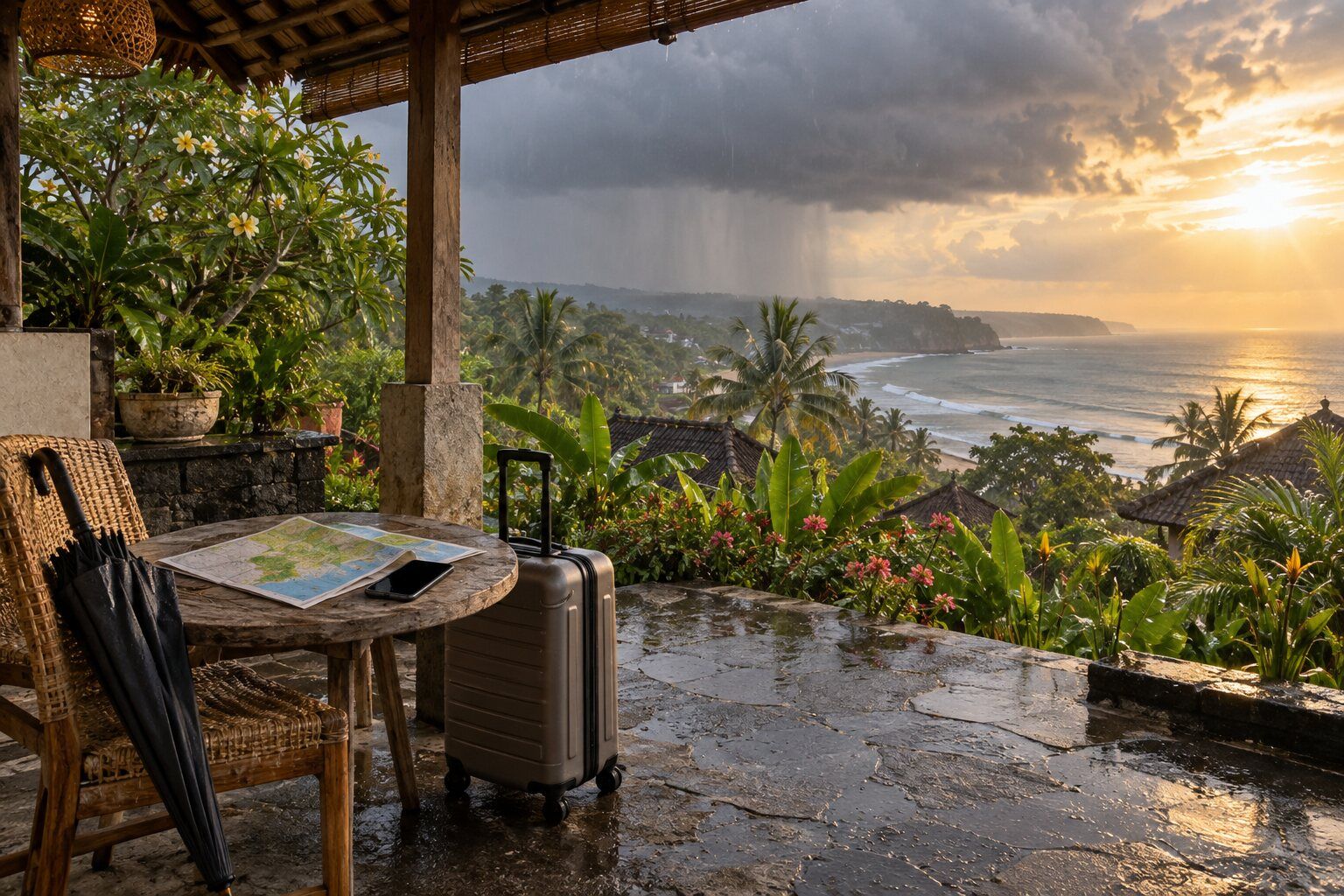
Why is Bali shoulder season often the strongest choice?
Late April through June and September through mid-October are Bali’s most useful shoulder-season windows. You receive much of the dry season’s practical benefit without the full July–August concentration of visitors and accommodation demand. May, June and September are the strongest months when weather reliability remains your main concern.
Late April to late June:Temperatures commonly reach 24°C–31°C (75°F–88°F), with roughly 12 hours of daylight. Crowds are moderate and accommodation prices are usually below the July–August peak. The landscape often remains green after the rainy season, while drier roads make day trips to temples, waterfalls and eastern Bali easier to organize.
May works particularly well for a mixed itinerary. You can divide a trip between the Bukit Peninsula, Ubud and Sidemen without building every day around rain. June offers still more reliable beach conditions, though visitor numbers start rising as school holidays approach. The Bali Arts Festival typically begins in June and continues into July, adding performances and cultural programming around Denpasar.
Early September to mid-October:September retains much of August’s dry weather, with moderate crowds after major holiday periods end. October becomes hotter and more humid, and afternoon showers grow more likely as the month progresses. It remains a practical period for travelers willing to move an outdoor activity by a few hours.
For visitors arriving from India, May, June and September can be especially convenient because Bali’s drier months overlap with part of India’s monsoon season. Travelers from South Africa may prefer June or September, when Bali provides tropical warmth during or near the Southern Hemisphere winter without requiring a Christmas-period budget.
What should you expect during Bali’s peak dry season?
July and August deliver Bali’s most dependable dry-season weather, lower humidity and strong west-coast surf, but they also bring the year’s busiest resort conditions and some of its highest accommodation rates. Book popular hotels, villas and inter-island transport six to eight weeks ahead, particularly for fixed family dates.
Early July to late August:Typical lowland temperatures are about 23°C–30°C (73°F–86°F), daylight lasts close to 12 hours, crowds are high and prices sit at peak levels. Mornings can feel surprisingly fresh on a scooter or in inland highlands, while midday sunshine remains strong enough to require shade and regular sunscreen.
For a classic beach itinerary with fewer interruptions from rain, July and August are the most reliable months. They suit sunrise walks, open-air dining, snorkeling excursions and long day trips. Visibility and sea conditions still vary, so boat departures and water activities should never be treated as guaranteed.
July and August also earn their crowded reputation. Canggu, Seminyak and central Ubud can feel congested, and road travel takes longer than map distances suggest. Base yourself near your priority activity rather than crossing southern Bali every day. Choose Uluwatu for cliffs and surf, Sanur for a calmer family base, Ubud for culture, or Sidemen for a quieter rural stay.
The trade-off is clearest around sunset venues, landmark temples and highly reviewed restaurants. Advance reservations become useful, but leaving one unscheduled day still protects your itinerary from traffic, sea changes or simple travel fatigue.
Can the Bali rainy season still be worth visiting?
The Bali rainy season can suit budget-conscious travelers, remote workers and visitors focused on spas, food or wellness rather than uninterrupted beach days. November through March is hot, humid and prone to intense showers, yet rain often arrives in bursts rather than as constant all-day rainfall.
November to March:Temperatures generally stay around 24°C–31°C (75°F–88°F), with close to 12 hours of daylight. Crowds are low to moderate outside Christmas, New Year and selected regional holidays. Prices often fall below dry-season levels, though festive dates can become as expensive and crowded as July or August.
January and February carry the greatest risk of repeated downpours, rougher sea conditions and debris washing onto west-facing beaches. High humidity makes midday walking tiring, and waterfall paths or volcanic trails may become muddy and slippery. Boat journeys to Nusa Penida, the Gili Islands or Lombok can also feel less comfortable during unsettled weather.
The positive side is a greener landscape, fewer visitors at many attractions and better availability at villas outside holiday weeks. East-coast breaks become relevant for experienced surfers during the wet-season swell pattern, while yoga, cooking classes, cafés and spa days provide weather-resistant alternatives.
Nyepi, Bali’s Day of Silence, usually falls in March, though its Gregorian date changes each year. The airport closes, roads empty and visitors remain within their accommodation for the observance. It can be a meaningful cultural experience when planned deliberately, but it creates a serious logistical problem if it overlaps with an intended arrival, departure or island transfer. Check the confirmed date for 2026 or 2027 before booking flights.
When should you visit for surfing, families or lower costs?
Choose May, June or September for a first trip; June or September for families; April through October for west-coast surfing; and February, March or November for lower prices. Travelers seeking fewer crowds without accepting the wettest conditions should prioritize May, early June, September or early October.
- Families:June and September balance drier weather with less pressure than July and August. Sanur and Nusa Dua offer calmer resort environments, while shorter transfers reduce the effect of traffic on younger children. If school dates require July or August, reserve family rooms and transfers six to eight weeks ahead.
- First-time visitors:May and June are forgiving months for combining temples, rice terraces, beaches and a volcano area. September provides a similar mix after the busiest holiday period.
- Budget travelers:February, March and November often provide the strongest room availability and the cheapest time to visit Bali outside major holidays. The saving comes with more humidity, rain disruption and less reliable boat conditions.
- Travelers avoiding crowds:Late April, May, September and early October offer a calmer pace than the July–August peak. North Bali, Sidemen, Amed and parts of West Bali also remain quieter than Canggu, Seminyak and central Ubud in most seasons.
- Surfers:The west side of the island, including Uluwatu and Canggu, generally performs best in the dry-season swell and wind pattern from roughly April to October. The east coast becomes more relevant in the wetter months. Match the break to your ability rather than selecting a coast by season alone.
- Divers and snorkelers:The drier months usually offer easier trip planning, but visibility varies by site, tide, wind and recent rainfall. Manta and marine-life sightings are never guaranteed.
- Festival-focused visitors:The Bali Arts Festival typically runs from June into July. Galungan and Kuningan follow Bali’s 210-day Pawukon calendar, so they do not stay in the same Gregorian month each year.
If you are researching the best time to visit Bali in 2026 or 2027, treat seasonal patterns as the foundation and movable festivals as a separate calendar check. Weather tendencies remain useful years ahead; exact ceremony dates, school holidays and airfares require confirmation closer to departure.
When should you avoid visiting Bali?
Avoid late December through early January if you want low prices, light traffic or dependable beach conditions. Avoid January and February when uninterrupted outdoor touring is essential. July and August are poor fits for travelers who dislike dense crowds, while Nyepi requires special planning because transport and normal daily activity stop.
Late December to early January:This period combines rainy-season uncertainty with holiday demand. Accommodation and flights can be expensive, roads around southern Bali become busy, and popular restaurants require reservations. It is one of the weakest windows for travelers seeking either bargain prices or quiet resort areas.
Mid-January to late February:These weeks should be avoided for itineraries built around daily hikes, frequent boat transfers or west-coast beach time. Heavy showers may be short, but repeated rain can affect trails, ocean conditions and road schedules. A flexible wellness or food trip is more realistic than a tightly timed outdoor circuit.
Peak July and August:The weather is attractive, yet the crowd and cost trade-off is substantial. If this is your only available period, avoid unnecessary cross-island travel. Spending three nights in each region is usually more comfortable than changing hotels every night or attempting daily returns to one southern base.
No month needs to be rejected for every type of traveler. The periods above become poor choices only when their defining conditions directly conflict with your priorities. A rain-tolerant traveler may value February’s quieter hotels, while a family tied to school holidays may gladly accept August prices for drier days.
What should you pack and arrange before flying?
Pack light, breathable clothing in every season, then add stronger rain protection from November through March and a light layer for highland mornings during the dry season. Arrange transport, mobile data and key reservations before departure, while keeping enough flexibility to move outdoor plans around rain, traffic or sea conditions.
For April to October:Bring high-SPF sunscreen, a hat, refillable bottle, breathable shirts, sandals and shoes suitable for temple grounds or walks. A light rain jacket still has value because dry season does not mean zero rain. Add a thin layer for Mount Batur, Munduk or early scooter journeys.
For November to March:Choose a compact umbrella, quick-drying clothing, a waterproof pouch and footwear with reliable grip. A lightweight poncho is more practical than a heavy jacket in humid weather. Protect passports and electronics during boat journeys and roadside transfers. Thesmart packing guide for travel and airport securitycan help you organize liquids, batteries and essential documents.
How can you stay connected between Bali regions?
If you need maps for rural roads, driver messages, ferry updates or same-day weather checks, arranging mobile data before arrival removes an avoidable airport task. AneSIMis an embedded SIM that can hold a digital carrier profile without replacing your physical SIM; this guide towhat an eSIM card isexplains the basic technology, while theGSMA overview of eSIM standardsdescribes remote SIM provisioning.
Some older or region-specific phones do not support eSIM, so check theeSIM-compatible device listbefore purchasing. Mobile performance can also vary by operator, congestion, terrain and location; theOokla Indonesia connectivity reportprovides broader network-performance context rather than a guarantee for every beach, village or hotel.
If your Bali itinerary combines a short resort stay with several days of navigation and bookings, trip-specific control can prevent you from buying more validity than you need. Yoho Mobile lets you select Indonesia, your preferred data allowance and the exact number of usage days independently. You can review anIndonesia eSIM plan, then manage it through theYoho Mobile app for iOSor theYoho Mobile app for Android.
If this is your first digital SIM experience, thefree eSIM trialoffers a low-commitment way to learn the process, whileYoho Careprovides an emergency data option if an eligible plan runs out unexpectedly.
For daily navigation, save important places offline and reviewhow much data Google Maps uses. Keep your accommodation address available offline as well, since rural roads, mountain areas and crowded event locations may produce inconsistent signal regardless of service.
The final timing decision is simple: choose May, June or September for the broadest balance; July or August for the most reliable dry weather; and February, March or November when lower prices matter more than predictable sunshine. Match the month to your actual itinerary rather than expecting one season to work equally well for every Bali trip.