
Amsterdam Luggage Storage Guide
Arrival and departure days in Amsterdam often leave you with five useful hours and one awkward suitcase. Dragging bags across canal bridges, tram platforms, museum cloakrooms, and narrow café aisles can turn a flexible day into a sequence of detours, missed entries, and sore shoulders. This guide shows where to store luggage in Amsterdam and how to turn bag-free time into practical sightseeing routes near stations, museums, canals, and airport connections.
Why Does Luggage Storage Matter So Much in Amsterdam?
Amsterdam luggage storage matters because the city is compact but physically awkward with bags. Bridges, cobbled lanes, crowded trams, steep station stairs, and museum entry rules make even short sightseeing windows easier when your suitcase is stored near your next transport link.
Amsterdam looks easy on a map because major sights sit close together: Centraal Station, the Jordaan, Dam Square, the Nine Streets, the canal belt, and the Museum Quarter can all fit into one well-planned half day. The friction appears at street level. Many canal bridges have short climbs, sidewalks can be narrow, bike lanes demand attention, and tram stops are not designed for travelers rolling large suitcases at peak commuter times.
Bag-free sightseeing also gives you better timing. If you arrive before hotel check-in, you can store luggage near Amsterdam Centraal and walk straight into the historic center instead of losing time crossing town twice. If your flight leaves in the evening, you can store bags near the station or along the airport train corridor and keep your final hours for a museum, canal cruise, or relaxed lunch.
The biggest hidden benefit is route discipline. Once you choose storage near a station, attraction cluster, or neighborhood, the city becomes easier to read. You stop zigzagging between your hotel, the lockers, and the sights, and you build a route that ends close to your onward train, airport transfer, or accommodation. That is the difference between Amsterdam sightseeing with bags and an actual final day in the city.
Where Should You Store Luggage in Amsterdam?
The best place to store luggage in Amsterdam depends on your next move. Use Amsterdam Centraal for trains and canal-center sightseeing, Museum Quarter storage for Rijksmuseum or Van Gogh Museum visits, and Schiphol-linked storage when your priority is a clean airport transfer.
Amsterdam luggage storage is easiest when you match the storage area to your route rather than choosing the cheapest location on a map. A low price can stop being useful if it adds two tram rides and 40 minutes of backtracking. For most visitors, the best areas fall into a few clear use cases.For the specific source behind this point, checkRequirements for telecom providers in the Netherlands | Business.gov.nl.
| Storage area | Best for | Route advantage | Watch for |
|---|---|---|---|
| Amsterdam Centraal | Train arrivals, canal cruises, old town walks | Easy access to Damrak, Jordaan, ferries, and airport trains | Locker demand can be high at busy times |
| Dam Square and Nieuwmarkt | Historic center, short layovers, café breaks | Good for walking loops without using much transport | Streets can be very crowded on weekends |
| Museum Quarter | Rijksmuseum, Van Gogh Museum, Vondelpark | Best if your timed museum ticket anchors the day | Not ideal if your train leaves soon from Centraal |
| De Pijp and Vijzelgracht | Food, markets, museums, metro access | Useful middle ground between canal belt and south Amsterdam | Check walking distance carefully with heavy bags |
| Schiphol Airport area | Early arrivals, late flights, airport hotels | Reduces risk before departure | Less convenient for city-center wandering |
Amsterdam station luggage storage is the natural default if you arrive by rail or plan to leave by train. Centraal is especially useful because many first-time routes begin there: the old harborfront, Damrak, the Royal Palace area, the Jordaan, and several canal cruise departure points. It is also connected to Schiphol by frequent trains, making it practical for flight days when you still want time in the center.
If museums are the main event, store bags closer to the Museum Quarter instead. Major museums often have restrictions on large bags, and cloakrooms are not a substitute for suitcase storage. A storage point near Museumplein lets you arrive for timed entry without negotiating tram crowds from Centraal. For wider trip planning, pair this with broadertravel apps that help organize maps, tickets, and bookingsso your storage choice fits your day rather than becoming a separate errand.
How Do You Choose Safe and Convenient Amsterdam Luggage Storage?
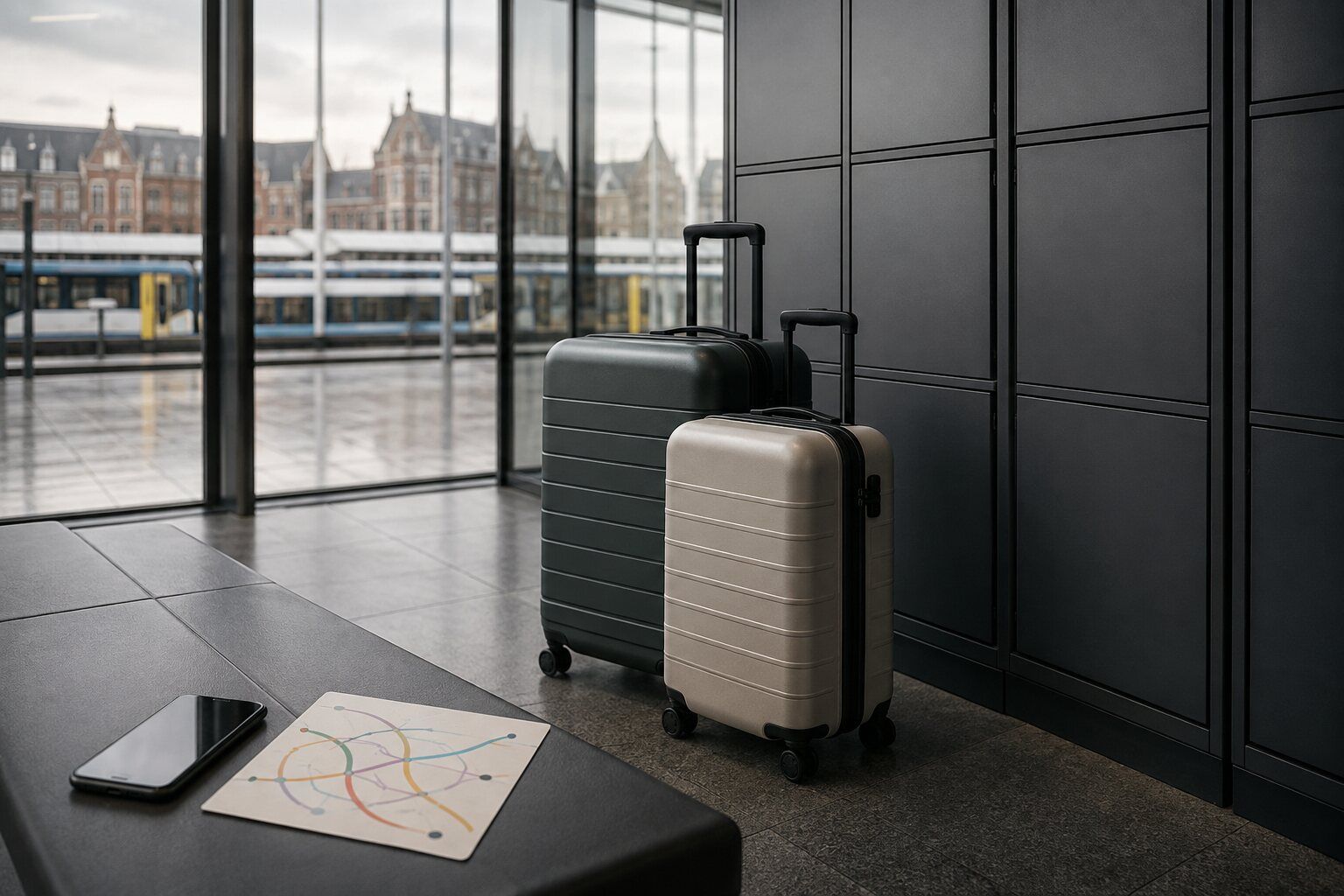
Choose Amsterdam luggage storage by checking location, opening hours, bag size rules, security process, insurance terms, and pickup timing. The safest option is not always the closest one; it is the option that stays open when you return and fits your exact suitcase.
Amsterdam lockers, hotel luggage rooms, station facilities, and staffed partner shops all solve the same problem in different ways. Lockers are fast when available, but they can fill up and may have size limits. Staffed storage locations are often more flexible for larger suitcases, though you need to respect counter opening hours. Hotels are convenient when you are a guest, but they may be far from your sightseeing route.
Use this decision checklist before you book or pay:
- Distance from the next activity:Ten minutes on foot is usually better than one cheap location that requires a tram transfer.
- Distance from your final transport:Your pickup point should sit naturally between your last sight and your station, airport train, or hotel.
- Opening and closing hours:Late flights need late pickup. Early arrivals need morning drop-off.
- Bag size:Check whether large suitcases, sports gear, strollers, or multiple bags are accepted.
- Security process:Look for staffed handover, bag tags, digital booking records, or controlled access.
- Price structure:Confirm whether pricing is per bag, per locker, per hour, or per day.
- Valuables policy:Keep passports, cards, medication, laptops, and irreplaceable items in your daypack.
A practical safety rule is to separate convenience items from critical items before you reach the counter. Your suitcase can hold clothing, toiletries, shoes, and souvenirs. Your daypack should hold passport, wallet, phone, charger, medication, glasses, travel documents, and any electronics you cannot afford to lose. This is also where smart packing matters: a well-organized daypack makes a stored-suitcase day feel normal instead of improvised. If you want to refine that setup before the trip, use thesedaypack packing ideas for sightseeing days.
Do not assume every museum cloakroom can solve a luggage problem. Many cultural venues accept coats and small bags but reject suitcases for security and space reasons. If your day includes a timed museum ticket, treat luggage storage as part of the ticket plan. Store first, arrive early, and keep your confirmation accessible offline or in your email so you are not searching for it at the door.
What Can You See After Dropping Your Bags?
After storing bags in Amsterdam, choose a sightseeing route that loops back toward your pickup point. The easiest options are a Centraal-to-Jordaan canal walk, a Museum Quarter route, or a De Pijp food-and-park loop before returning for your luggage.
Bag-free sightseeing works best when your route has a clear anchor. In Amsterdam, that anchor is usually a station, a timed museum entry, a canal cruise, or a neighborhood meal reservation. Build your route around one of those instead of trying to cover the whole city in a few leftover hours.
What Is the Best Short Route From Amsterdam Centraal?
A classic arrival-day loop runs from Amsterdam Centraal to Damrak, Dam Square, the canal belt, and the Jordaan before returning toward the station. This is ideal if you have two to four hours and want a first impression without using much public transport.
- Dam Square and Royal Palace area
- Hours: The square is open at all times; palace visiting hours vary by official schedule.
- Entry price: The square is free; palace entry requires a ticket when open to visitors.
- Transport: Walk about 10 minutes from Amsterdam Centraal via Damrak.
- The Nine Streets
- Hours: Public streets are open at all times; shops usually operate daytime and early evening hours.
- Entry price: Free to wander; budget separately for cafés and boutiques.
- Transport: Walk 15 to 20 minutes from Dam Square through the canal belt.
- Jordaan canals
- Hours: Open at all times; daylight is best for photos and navigation.
- Entry price: Free.
- Transport: Walk west from the Nine Streets, then loop back toward Centraal in 20 to 25 minutes.
Which Route Works Best for Museum Tickets?
If your timed entry is in the Museum Quarter, store luggage nearby and keep the day focused. The Rijksmuseum and Van Gogh Museum are close enough to combine with Museumplein, Vondelpark, or a meal in De Pijp, but only if you avoid crossing back to Centraal mid-route.
- Rijksmuseum
- Hours: Commonly open daily during daytime hours; check your ticket time before travel.
- Entry price: Paid admission for most adult visitors; children and discount categories vary.
- Transport: Use tram or metro connections to Vijzelgracht, then walk to Museumplein.
- Van Gogh Museum
- Hours: Usually open daily, with seasonal timing changes.
- Entry price: Timed paid ticket required for most visitors.
- Transport: Walk a few minutes from Rijksmuseum across Museumplein.
- Vondelpark
- Hours: Open daily.
- Entry price: Free.
- Transport: Walk 5 to 10 minutes from Museumplein.
For a relaxed final day, a museum route pairs well with a late afternoon pickup and a direct connection back to your hotel or station. You may cover fewer sights, but the quality of the hours improves because you are not carrying luggage through security queues or busy tram aisles.
How Should You Pack for a Lighter Amsterdam Day?
Pack a small daypack before storing your suitcase in Amsterdam. Keep essentials, weather protection, payment cards, medicine, chargers, and museum or transport confirmations with you, while leaving clothing, shoes, liquids, and souvenirs in stored luggage.
Amsterdam weather can shift quickly, and the city rewards walking. A light sightseeing kit should let you handle rain, navigation, payments, photos, and transport without reopening your suitcase. Before you hand over a bag, pause for two minutes and transfer anything you might need before pickup.
Your Amsterdam daypack should include:
- Passport or national ID, if you do not have secure hotel access.
- Payment card and a small amount of cash for markets or small purchases.
- Phone, power bank, and charging cable.
- Medication, glasses, contact lenses, or other health essentials.
- Light rain layer or compact umbrella.
- Reusable water bottle.
- Museum tickets, luggage storage confirmation, and onward travel details.
- A tote bag for small purchases so you do not overfill your pockets.
The item many travelers forget is pickup timing. If your storage point closes at 8 p.m., your daypack should include everything needed to shift plans if dinner runs late or a tram delay appears. Store the location pin, booking code, and closing time in a place you can access without mobile data, such as an offline note or screenshot.
Airport security also affects how you pack on departure day. Liquids, sharp items, larger toiletries, and heavier souvenirs should stay in the suitcase if you are going directly to the airport after pickup. For a broader pre-trip system, reviewsmart packing for travel and airport securitybefore you leave home. A little organization keeps the luggage counter from becoming the place where you repack half your belongings on the floor.
How Do You Stay Connected While Moving Around Amsterdam?
Stay connected in Amsterdam by arranging mobile data before you need maps, luggage pickup details, train platforms, museum tickets, or ride updates. A flexible travel setup is most useful on arrival and departure days, when storage locations and transport timing can change quickly.
A bag-free Amsterdam route still depends on your phone. You may need to find the storage counter, scan a booking confirmation, check tram disruption alerts, open museum tickets, compare walking routes, or message your accommodation about check-in. Public Wi-Fi can help inside hotels and cafés, but it is less reliable while moving between canals, stations, and attractions.
For Amsterdam specifically, your connectivity needs are usually modest but time-sensitive. Maps, messaging, translation, mobile tickets, and luggage booking pages do not require huge amounts of mobile data for most travelers, yet losing access at the wrong moment can make pickup or airport transfer stressful. If you want to estimate map usage before choosing an allowance, this guide tohow much data Google Maps usescan help you avoid overbuying.
When your day depends on live maps and booking details, arranging mobile data before departure gives you one less task after landing. Yoho Mobile lets you choose the destination country or countries, the data amount, and the validity period separately, which suits Amsterdam trips that may be a two-day stopover, a long weekend, or part of a wider Europe itinerary. You canbrowse Yoho Mobile eSIM plansand match the plan to the number of days you actually need.
If you prefer managing the plan from your phone while organizing tickets and storage confirmations, use theYoho Mobile app for iOSor theYoho Mobile app for Androidbefore your trip. If you are trying this travel setup for the first time, thefree eSIM trialandYoho Careemergency data service can help you test the experience and keep a backup option in mind.
Network quality in the Netherlands is generally strong by global standards, and Ookla publishes mobile performance reporting for the country in theNetherlands Speedtest Connectivity Report. Even so, your device, plan, building interiors, station congestion, and local network conditions can affect real-world performance. Download key maps and save luggage details offline before you start sightseeing.
Frequently Asked Questions
Can you store luggage overnight in Amsterdam?
Yes, many staffed luggage storage services in Amsterdam offer overnight storage, while station lockers are better for same-day use. Always check closing hours, maximum storage duration, and whether the price is charged per item or per day before booking.
Are Amsterdam lockers large enough for suitcases?
Amsterdam lockers vary by location. Station lockers usually include several sizes, but large suitcases may not fit if lockers are full or unavailable. Staffed storage counters and app-based partner shops are often more flexible for oversized bags.
Where should you store luggage before a canal cruise?
For canal cruises near Centraal Station, store bags around Amsterdam Centraal, Damrak, or Nieuwmarkt. For cruises near the Museum Quarter, choose storage around Vijzelgracht, Leidseplein, or De Pijp to avoid crossing the city twice.
Is it safe to leave luggage in a hotel after checkout?
Most hotels in Amsterdam will hold luggage for guests after checkout, and this is usually safe for standard baggage. Keep passports, cash, cards, medicines, and electronics with you because hotel luggage rooms may be shared with other guests.